Need bridal dress alterations Vancouver brides trust? Learn what to expect before your first fitting and book your alterations with confidence.
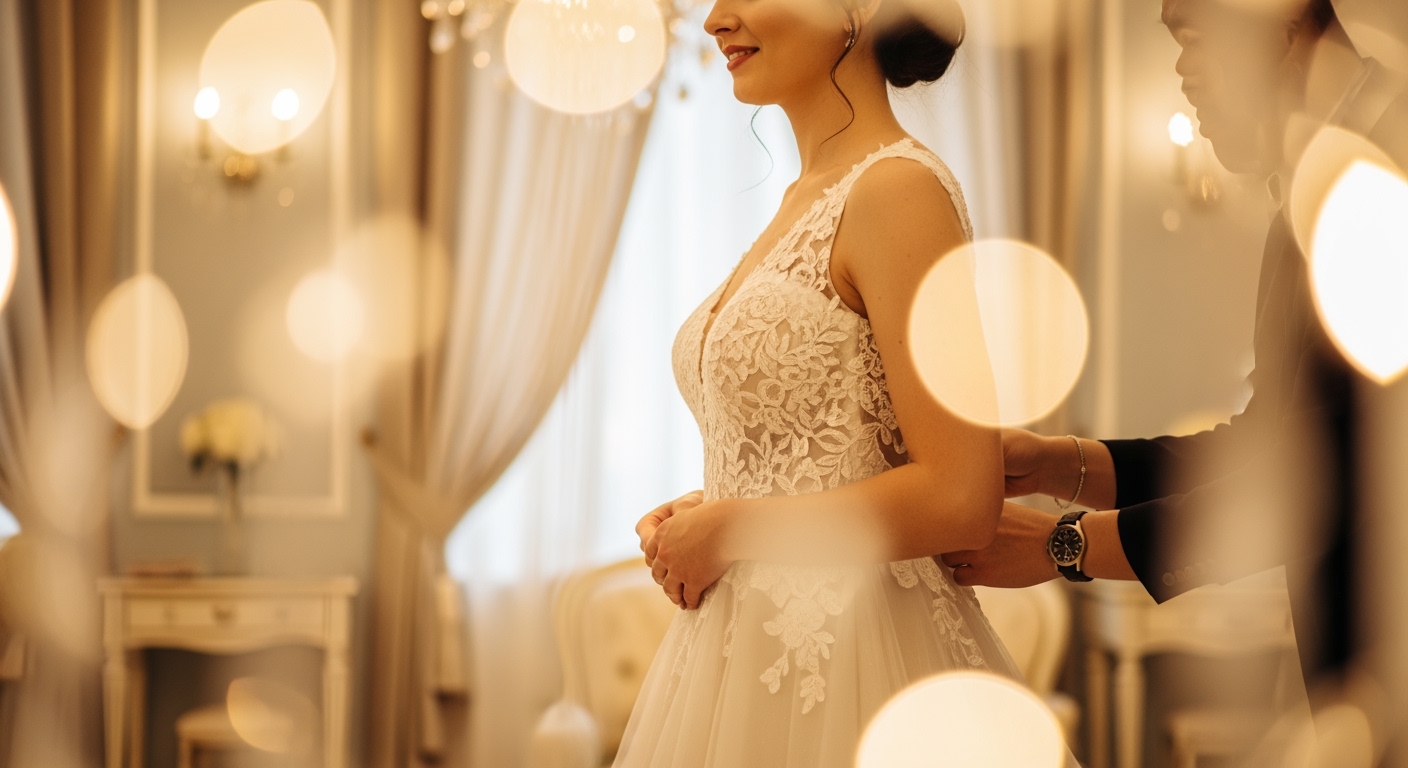
Buying the dress is emotional. Altering it is practical. And if I'm honest, that second part is what makes the first part actually work.
A wedding dress almost never fits perfectly straight off the rack. Even when it feels close, there are usually small adjustments needed to get the shape right, the hem right, and the movement right. That matters more than people expect. A dress can be beautiful on the hanger and still feel awkward once you start walking, sitting, hugging people, and dancing for hours.
If you're searching for bridal dress alterations Vancouver or trying to plan your first wedding dress fitting Vancouver appointment, here's what helps to know before you go.
The short answer is this: book earlier than you think you need to.
For most brides, the best window is about 8 to 12 weeks before the wedding. That usually gives enough time for the first fitting, follow-up fittings, and any fine-tuning without turning the process into a sprint. If your dress has lace appliqué, heavy beading, multiple layers, or major resizing, more time is better.
A simple hem or small strap adjustment may not need a long runway, but bridal timelines have a way of getting tight all at once. Shoes arrive late. Weight fluctuates. Final accessories change the silhouette. Suddenly a "quick alteration" isn't so quick anymore.
A general timing guide looks like this:
Book your first appointment 2 to 3 months before the wedding.
Plan the first fitting once you have your dress, your shoes, and the undergarments you expect to wear.
Leave space for a second fitting, and sometimes a third if the dress is detailed or highly structured.
Try not to schedule your final fitting too early. You want it close enough to the wedding that the fit still reflects your body comfortably and accurately.
If your wedding is coming up fast, don't panic. Rush work is sometimes possible, but bridal work is delicate, and delicate work should not feel rushed if it can be avoided.
This is where a lot of stress can be prevented with a little planning.
Bring the things that affect how the dress sits on your body and how long it appears when you stand. That usually means:
Your wedding shoes, or a pair with the same heel height
The bra, shapewear, or cups you plan to wear
Any petticoat or underskirt, if your dress uses one
Your veil or major accessories, if they change the neckline or overall look
A hair tie, if you want to quickly mimic your hairstyle and see the neckline more clearly
If you haven't finalized every accessory, that's okay. Shoes are the big one. Hem length is hard to judge properly without them, and guessing tends to create problems later.
It also helps to wear comfortable, easy-on clothing to the appointment. You'll be changing in and out of the dress, standing on a fitting platform, and talking through details. The less fussy the rest of the outfit is, the better.
And one more thing people don't always think about: bring your honest reactions. If something feels too tight, too loose, too high, too low, say it. A good fitter wants specifics. "I can't lift my arms comfortably" is useful. "It feels kind of weird" is a start, but the more precise you can be, the easier it is to fix.
Every gown is different, but a handful of alterations come up again and again.
The hem is one of the most common adjustments, and one of the most important. A wedding dress should skim the floor in a way that looks intentional, not sloppy. Too long, and you spend the day kicking fabric forward with every step. Too short, and the proportions can feel off.
Hemming bridal gowns can be more complex than hemming everyday clothes because there may be several layers involved, from lining to tulle to lace.
If your dress has a train, you'll probably need a bustle. This lets the train be lifted and secured for the reception so you can move around more easily after the ceremony.
Bustles sound simple until you realize there are different styles, different attachment points, and different ways the dress folds when it's lifted. Done well, a bustle looks clean and stays secure. Done poorly, it can pull awkwardly or come loose halfway through dinner.
Straps often need shortening so the neckline sits where it's supposed to. Bodices may need to be taken in or let out slightly for support and comfort.
This part matters because bridal fit is not only about appearance. It's also about whether you feel held in properly. You should be able to breathe, sit, and move without constantly adjusting the dress.
Sometimes the zipper area needs refinement so it lies flat and closes smoothly. In other cases, hooks, buttons, or a corset back need adjustment.
These changes can sound minor, but they affect the clean line of the entire gown. A wavy zipper or pulling back seam shows up quickly, especially in photos.
This is where bridal alterations stop being "just tailoring."
Wedding dresses are often made with delicate fabrics that behave very differently from the materials in daily wear. Silk, satin, organza, tulle, lace, crepe, layered linings, horsehair braid, boning, built-in cups, hand-applied beading, invisible mesh, illusion necklines, all of that changes how a dress must be handled.
A simple pin on cotton does not behave the same way on lace over tulle. A hem on a casual skirt is not the same as a hem on a gown with multiple layers and scalloped lace edges. Even pressing the fabric takes judgment. Too much heat, too much tension, or the wrong stitch placement can leave marks, puckering, or distortion.
This is why bridal alterations Vancouver clients should ask about experience specifically with wedding gowns, not just general tailoring. Someone can be excellent with trousers and jackets and still find bridal work frustrating. It is a separate skill set.
I've seen brides assume that because the alteration needed sounds small, the job itself is small. That's rarely true with wedding dresses. Sometimes moving a strap by half an inch means rebalancing the neckline, the bust support, and the way the back sits. Little changes can ripple through the whole gown.
Lace and beading are where experience really shows.
If a dress has lace appliqué, the goal is often to make the alteration disappear. That may mean removing lace motifs by hand, adjusting the seam underneath, then reapplying the lace so the pattern still looks natural. It takes patience. It also takes a good eye. If the lace is placed carelessly after alteration, the dress can look uneven even when the fit is technically correct.
Beading adds another layer of difficulty. Beads and sequins near seams often need to be removed before stitching, then sewn back on by hand. Skip that step, and the machine can break a needle, snag the fabric, or create bulky, stiff areas that don't drape well.
This is one of those moments where "close enough" is not really close enough. Bridal photos are unforgiving. So is bright daylight. So is your own memory of how you felt wearing the dress.
A fitter with real bridal experience usually notices details you might miss at first, like where lace placement affects the visual balance of the bodice, or how bead weight changes the fall of the skirt. That kind of judgment is hard to fake.
It should feel calm. Focused. Collaborative.
You should leave understanding what is being changed, roughly how many fittings you may need, and what to expect next. If you are unsure about something, ask. You are not supposed to know all the terminology. That's the point of working with a professional.
A good fitting is not about being talked into changes you don't want. It's about refining the dress so it feels like your dress, on your body, for your day.
If you're ready to book a bridal alterations appointment in Vancouver, do it as soon as your dress arrives and your wedding details start taking shape. The earlier conversation is often the easier one.
Your first fitting does not need to be intimidating. It is just the start of making the dress truly yours.
Bring the right shoes. Book with enough time. Expect a few common adjustments. And do not underestimate how different bridal fabrics are from everyday garments. Most of all, choose someone who understands lace, beading, structure, and the quiet technical work that makes a gown look effortless.
Because when the fit is right, you stop thinking about the dress every five minutes. You just wear it. And that is usually the whole goal.
Most standard alterations are completed within 3–5 business days. Complex or high-volume requests may take a bit longer.
Most alterations are completed within 4-7 days, depending on garment complexity and your specific needs.
We specialize in bridal gowns, formalwear, men’s suits, and also offer everyday clothing alterations and repairs.
Yes, we do our best to accommodate urgent requests. Please contact us directly to discuss your timeline.
Bring the garment you need altered, along with undergarments and shoes you plan to wear with it for the perfect fit.
Yes, we offer a complimentary consultation to discuss your needs and provide an estimate.
Absolutely! Our experience includes tailoring costumes for award-winning films and unique events.
Pricing varies by garment and complexity. We provide transparent quotes after assessing your needs at the consultation.
We prioritize health and safety with enhanced cleaning protocols and by limiting the number of clients per day.
Experience expert tailoring with a complimentary consultation for all new clients. Enjoy the confidence of a flawless fit for your bridal gown, suit, or special occasion wear, delivered in just 4-7 days. Let us bring your dream look to life with personalized service and unmatched craftsmanship.