How long do clothing alterations take? Learn realistic timelines for hems, suits, and wedding dress alterations in Vancouver. Plan your fitting today.
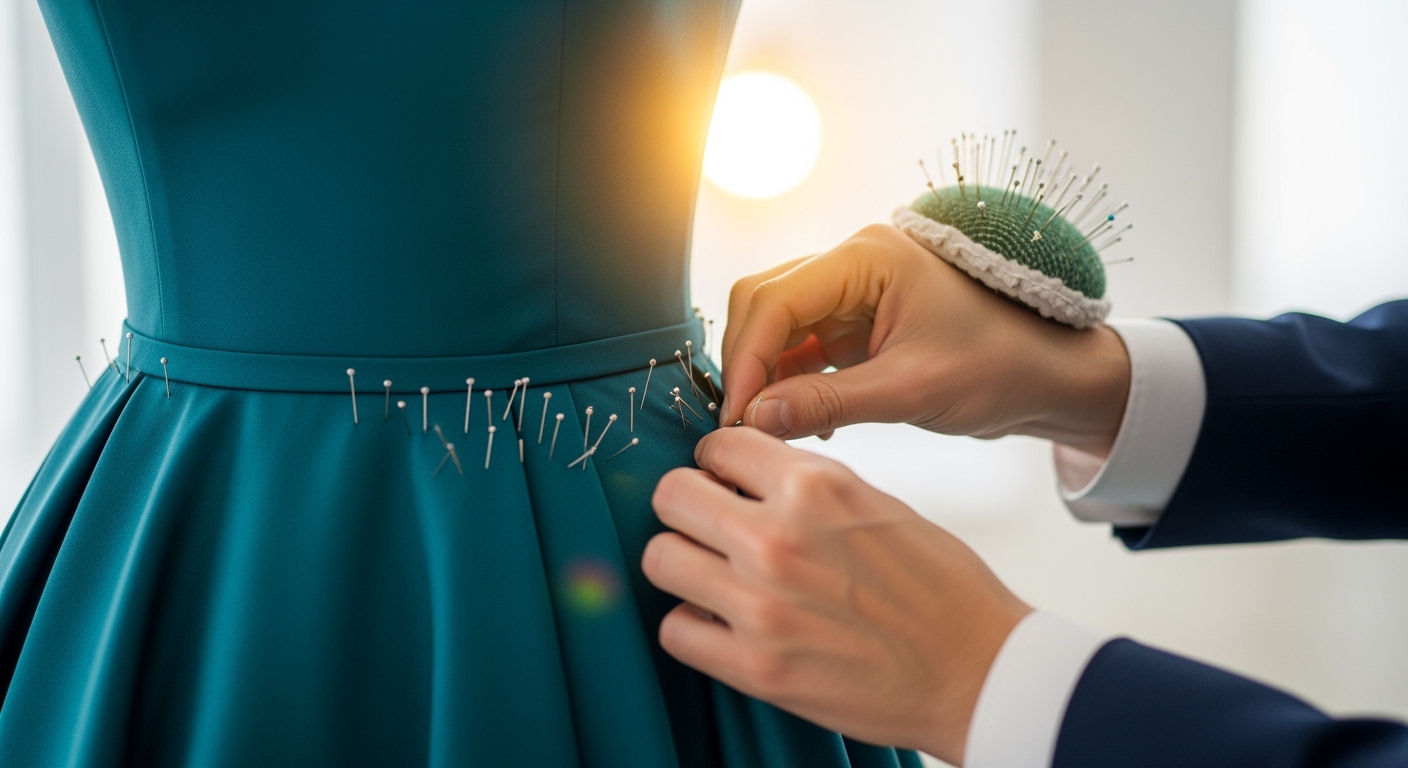
If you want the shortest honest answer, here it is: clothing alterations can take anywhere from a couple of days to a couple of months.
That sounds annoyingly broad, I know. But hemming a pair of pants is one thing. Reshaping a wedding dress bodice covered in lace is something else entirely. People often hear one turnaround estimate from a friend, then assume every tailor works on the same clock. That is where frustration starts.
If you are in Vancouver, BC, and you are planning for a wedding, gala, grad, or big work event, timing matters almost as much as fit. A beautiful garment that is finished too late is still a problem. So this guide walks through what usually takes days, what usually takes weeks, and why some jobs should never be left to the last minute.
Here is a realistic ballpark for common alterations. These are general estimates, not promises, and they usually assume the garment does not need a full redesign.
AlterationTypical turnaroundPant hem2 to 5 daysSimple skirt hem2 to 7 daysShirt sleeve shortening3 to 7 daysZipper replacement3 to 7 daysWaist taken in on pants or skirt3 to 7 daysSuit pants hem and waist adjustment4 to 7 daysSuit jacket sleeve or side adjustments1 to 2 weeksBridesmaid dress alterations1 to 3 weeksProm or formal gown alterations1 to 3 weeksWedding dress alterations6 to 12 weeks, often with multiple fittingsMajor redesign or heavy beading workSeveral weeks to a few months
A basic rule helps here. The more structure, layers, lace, boning, beading, or lining a garment has, the longer it usually takes.
Also, the timeline is not just sewing time. It includes fitting, pinning, machine work, hand finishing, pressing, and sometimes another fitting to check the result.
People sometimes imagine tailoring as one straight line: pin it, sew it, done. In real life, it is more like problem-solving in fabric.
A simple hem is usually fast because the tailor is changing one part of the garment. A bridal bodice, on the other hand, might involve bust shaping, strap adjustment, side seam work, lace removal, reapplication of lace motifs, and checking that the zipper or buttons still lie flat after the changes. That is not one task. That is several tasks stacked on top of each other.
A few things have the biggest effect on timing.
Structured garments take longer. Suit jackets, wedding dresses, corseted gowns, lined coats, and garments with shoulder pads or canvassing all need more careful handling than a simple cotton dress.
Sometimes the outside fabric looks easy, but the inside tells a different story. That is common with formalwear. A clean outer silhouette can hide layers of horsehair braid, interfacing, tulle, or boning.
Not every alteration can be done cleanly by machine. Delicate fabrics, lace edges, invisible hems, and beadwork often need hand sewing. Handwork is slower, but it usually looks better.
This is one of those areas where speed is not always your friend. If someone promises same-day service for a heavily embellished gown, I would ask a lot of questions.
Some garments need one fitting. Some need three. Bridalwear is the usual example.
A first fitting often identifies the big changes. A second fitting checks balance and movement. A final fitting fine-tunes the hem, bustle, straps, or closure. Even if the actual stitching time is manageable, those appointments stretch the overall timeline.
Silk, satin, chiffon, velvet, sequins, and slippery synthetics can be stubborn. So can very delicate or very old garments. They shift, mark easily, or show every needle hole.
That matters because skilled tailors tend to work more slowly on fabrics that punish mistakes.
In Vancouver, alteration calendars get crowded at predictable times. Late spring and summer bring weddings. May and June often bring grad and prom appointments. November and December bring holiday eventwear.
The sewing itself has not changed, but the queue has.
Bridal alterations deserve their own section because they almost always take longer than people expect.
A wedding dress is rarely a single appointment. Even when the gown looks close to perfect at first try-on, it often still needs length adjustment, bustle work, bust support, waist shaping, strap changes, or side seam refinement. And if the dress has lace, illusion mesh, buttons, or beading, every change becomes more detailed.
For most brides, a sensible window is to begin alterations about 8 to 12 weeks before the wedding. That gives time for fittings without panic. Some people start earlier if the dress needs major changes, if travel is involved, or if their schedule is packed.
A typical bridal sequence looks like this:
First fitting, 8 to 12 weeks before the wedding.
Second fitting, 3 to 6 weeks before.
Final fitting, 1 to 2 weeks before.
That timing also leaves room for reality. Weight can shift. Shoes change. A bra that seemed fine in the boutique suddenly does not work. It happens all the time.
If you are getting married during Vancouver's busy wedding season, booking even earlier is smart. Good alteration calendars fill up fast, especially for Saturday weddings and summer dates.
A few details tend to add time:
multiple layers of tulle or horsehair hem
beaded lace that needs to be removed and sewn back on
a custom bustle with several pickup points
major size changes
neckline reshaping
sleeve additions or removals
weak internal support that needs rebuilding
This is also why buying a dress two sizes too big or too small is risky. People sometimes hope alterations can fix anything. They cannot, at least not quickly and not cheaply.
Grooms often have a more relaxed timeline in mind, especially if the suit already fits reasonably well off the rack. Sometimes that works. Sometimes it does not.
Common suit alterations include hemming trousers, tapering the leg, adjusting the waist, shortening sleeves, suppressing the jacket waist, and shortening shirt sleeves. Many of these are straightforward. A basic suit can often be altered in about a week, sometimes a bit longer depending on the shop's workload.
But jacket work is where people get surprised. Jacket sleeves, working buttonholes, shoulder balance, collar roll, and lining adjustments can all take more time than trouser work. If the jacket fits poorly through the shoulders or upper chest, the fix may be difficult, expensive, or not worth doing at all.
For grooms, I usually think 2 to 4 weeks before the wedding is a comfortable minimum for standard suit alterations. Earlier is better if the suit needs significant reshaping or if you want a second fitting for peace of mind.
And yes, bring the actual shirt and shoes if you can. The break on trouser hems changes with shoe height, and cuff length looks different depending on the shirt.
These garments often fall between everyday tailoring and bridalwork.
A bridesmaid dress or formal gown may need only a hem and slight strap adjustment, which is pretty manageable. Or it may need bust reshaping, side seam work, lining changes, and cleanup on fragile satin. Same category, very different workload.
A realistic estimate for most bridesmaid and event dresses is 1 to 3 weeks. Some are faster. Some definitely are not.
The biggest mistake I see people make with occasionwear is assuming the dress can be dropped off the week of the event because "it only needs a little taken in." Small visual changes can mean large sewing changes, especially with lined garments.
If the event matters, give yourself breathing room.
This is partly a city timing issue.
Vancouver has a long season of weddings, outdoor events, school formals, and black tie fundraisers. The weather shifts, the venues fill, and so do alteration calendars. A lot of people wake up to the same deadline at the same time.
That matters because many tailors work by appointment, especially for bridal and formalwear. You may not be able to walk in on a Thursday and get a detailed fitting that day. Even if the sewing turnaround is fairly quick, the first available appointment may not be.
There is also a practical truth here. The best fit often comes from a calmer schedule. If your first fitting happens months before the event, you have room to think. If it happens four days before, every tiny issue feels bigger.
You cannot force a complex alteration to become simple, but you can avoid delays. This helps more than people think.
Book as soon as you know you need alterations.
Do this even if the event is weeks away. An early appointment saves stress later.
Bring the right shoes and undergarments.
Hem length, bust fit, strap tension, and waist placement depend on what you wear underneath.
Tell the tailor your actual deadline.
Not your ideal deadline, your real one. If you leave town on Thursday, say Thursday.
Show up ready to decide how you want the garment to fit.
Too loose, too tight, more shape at the waist, less volume at the hem, cleaner trouser break, more room to sit. Specific feedback helps.
Avoid body changes after the final fitting if possible.
This especially matters for wedding dresses and fitted formalwear. Last minute dieting sounds disciplined in theory and chaotic in practice.
That last point can be awkward, but it is real. Altering for a moving target is hard. A gown fitted to one body shape may not sit the same two weeks later.
People do need last minute help. Zippers break. Event dates sneak up. Shoes arrive late and suddenly the hem is wrong.
Rush service can work well for a short list of jobs. Think hems, strap adjustments, simple waist tweaks, basic repairs, and some pant alterations. Those are the jobs most likely to be turned around quickly if the calendar allows.
Rush service is much less realistic for:
bridal gowns with lace or beadwork
major bodice reshaping
suit jacket reconstruction
shoulder work
delicate silk or bias-cut gowns
anything that should really be checked in a second fitting
There is also a quality issue. Good alteration work needs clean measurement, careful pressing, and time to check balance on the body. Speed can help in a pinch, but it is not a substitute for process.
If you need rush service, ask two direct questions: "What can actually be done by this date?" and "What will not be possible?" Honest answers matter more than hopeful ones.
This is not what people want to hear, especially after they have fallen in love with a dress or spent real money on a suit. But sometimes the fastest, least stressful answer is to start with a garment that fits better.
Alterations may not be the best route if:
the garment is several sizes too small
the shoulders are far too wide in a jacket
the bodice proportions are wrong for your frame
there is almost no seam allowance left
the fabric is very fragile
heavy beading crosses every seam that needs changing
A good tailor can do a lot. A tailor cannot turn every garment into the right garment.
That is not failure. It is just physics, construction, and time.
If you want a simple planning guide, this is a good one to keep in mind.
For a wedding dress, start the process 2 to 3 months before the wedding, sometimes earlier for complex gowns.
For a groom's suit, aim for at least 2 to 4 weeks before the event.
For bridesmaid dresses, prom dresses, and formal gowns, 2 to 3 weeks is a safer minimum, with more time if the dress has layers or embellishment.
For everyday tailoring, like hems and basic waist adjustments, a few days to a week is often realistic, but still worth booking ahead during busy seasons.
I would rather be early by two weeks than late by two days. Most people feel the same after their first alteration deadline scare.
So, how long do clothing alterations take?
For simple jobs, often a few days. For suits, roughly a week or two. For bridalwear, usually several weeks with fittings built in. For anything heavily structured or embellished, longer.
The honest answer is not glamorous, but it is useful: timing depends on the garment, the complexity, the season, and whether another fitting is needed.
If you are in Vancouver and planning around a wedding or formal event, give yourself more time than you think you need. That extra time buys better fit, better choices, and a much calmer final week.
And if a garment really matters, do not wait until it becomes an emergency. Sewing can be fast. Good fitting rarely is.
Most standard alterations are completed within 3–5 business days. Complex or high-volume requests may take a bit longer.
Most alterations are completed within 4-7 days, depending on garment complexity and your specific needs.
We specialize in bridal gowns, formalwear, men’s suits, and also offer everyday clothing alterations and repairs.
Yes, we do our best to accommodate urgent requests. Please contact us directly to discuss your timeline.
Bring the garment you need altered, along with undergarments and shoes you plan to wear with it for the perfect fit.
Yes, we offer a complimentary consultation to discuss your needs and provide an estimate.
Absolutely! Our experience includes tailoring costumes for award-winning films and unique events.
Pricing varies by garment and complexity. We provide transparent quotes after assessing your needs at the consultation.
We prioritize health and safety with enhanced cleaning protocols and by limiting the number of clients per day.
Experience expert tailoring with a complimentary consultation for all new clients. Enjoy the confidence of a flawless fit for your bridal gown, suit, or special occasion wear, delivered in just 4-7 days. Let us bring your dream look to life with personalized service and unmatched craftsmanship.