Learn why appointment-only tailoring leads to better fit and results for bridal, formalwear, and suits. Book a fitting with Orkide Boloor today.
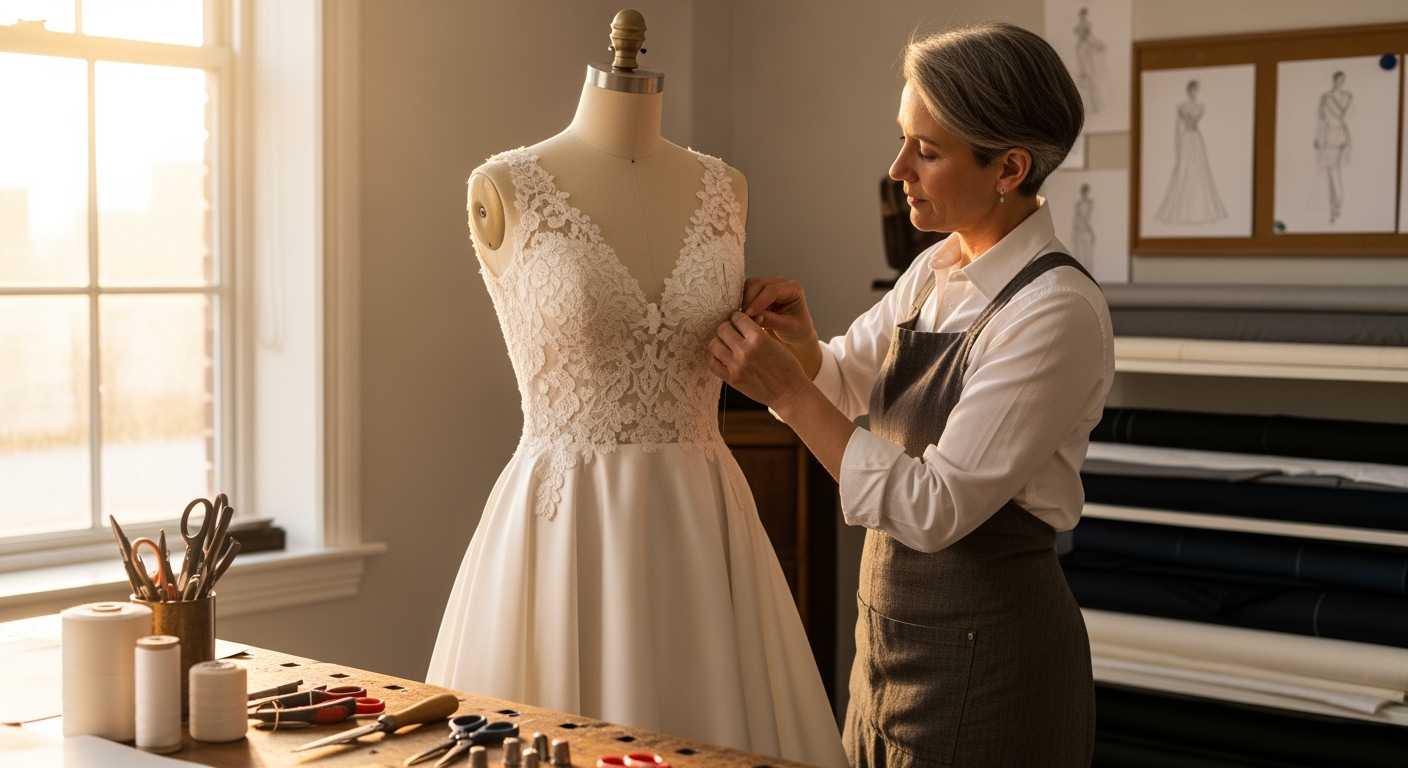
Walk-ins feel easy. You have a dress, a suit, or a pair of trousers that need work, so you stop by, hand it over, and hope for the best.
Sometimes that works.
But if the garment matters, and for many people it really does, an appointment usually leads to a better result. I feel strongest about this with bridal wear, formalwear, and anything you plan to be photographed in for years. Those pieces ask more from a tailor than a quick hem or a simple waist adjustment. They ask for judgment, time, and attention.
Appointment-only tailoring can sound a little strict at first. Some people hear it and think, “Why make this harder than it needs to be?” Fair question. Convenience matters. Still, there is a reason many experienced tailors prefer a booked fitting instead of a constant stream of drop-ins. Good alterations are part measurement, part observation, and part problem-solving. That work goes better when nobody is rushing.
If you want to understand why appointments matter so much, it helps to look at what tailoring really involves.
People often picture alterations as a straightforward technical job. Pin here, sew there, done. Real fittings are rarely that simple.
A tailor is reading your posture, your movement, the way a garment hangs, where the weight of the fabric pulls, and how the piece behaves when you sit, walk, or raise your arms. Two people with the same measurements can need different alterations because their shoulders sit differently, their stance is different, or the garment itself is cut in a way that changes how it falls.
This is why an appointment makes such a difference. It creates space to observe instead of react.
In a proper fitting, the tailor is not only asking, “Where is this too loose or too tight?” They are also asking things like:
What shoes will you wear?
What undergarments or shapewear will be underneath?
Are you dancing, walking down steps, sitting for a long ceremony, or getting into a car?
Do you want the fit crisp and structured, or softer and easier to move in?
Those questions sound small. They are not small. They change the final outcome.
A hem length for a wedding dress with flats is not the same as a hem length with heels. A jacket that feels perfect standing still can pull awkwardly once you hug someone or reach for a champagne glass. A fitted gown can look clean in the mirror but feel miserable after an hour if nobody checked how it moves with your body.
That kind of understanding takes time. Appointments protect that time.
The best fitting work usually begins with a conversation.
A good tailor wants context before making changes. What is the event? How do you want to feel in the garment? Are you hoping for a closer fit, or are you worried about comfort? Have you worn this style before, or is it new for you?
That conversation is easy to skip in a busy shop. A walk-in setup often pushes everyone toward speed. The tailor may have other clients waiting, phones ringing, garments to tag, and someone asking for a pickup at the counter. Even a skilled person can only split their attention so many ways.
Appointment-only service lowers that noise.
When there is a reserved time for your fitting, you are more likely to get thoughtful questions and clear answers. That matters because many clients do not know exactly what to ask for. They know something feels off, but they cannot name it. They might say, “The bodice feels weird,” when the real issue is strap placement. They might say, “The pants are too long,” when the break is actually fine and the problem is the rise.
This is where experience shows. A tailor who has time to look carefully can translate vague discomfort into specific fixes.
Bridal gowns, evening wear, and structured suits are not forgiving garments. They often have layers, linings, boning, lace, beading, delicate fabrics, and construction details that can be altered beautifully or badly. There is not much middle ground.
A rushed fitting increases the odds of small mistakes, and small mistakes in formalwear do not stay small for long.
Take a wedding dress. It may need the bust adjusted without disturbing the neckline. The hem may need work across several layers. Lace at the edge might need to be removed and reapplied by hand. The bustle has to be placed so the train lifts correctly and still looks balanced. That is a lot to sort out while three other people are standing nearby asking for express trouser hems.
The same goes for a suit. Sleeve length sounds simple until shirt cuff, shoulder line, button placement, and jacket balance all enter the picture. A clean-looking suit depends on proportion. If one change throws off another, the whole thing can start to look slightly wrong. Sometimes you cannot name why it looks off. You just feel it.
Appointment-only tailoring gives complicated garments the calm they need. And honestly, calm is underrated. Good decisions happen faster when nobody is panicking.
One of the most frustrating parts of alterations is picking up a garment and realizing it is technically altered but still not right.
Maybe the dress is tighter than you expected. Maybe the trousers sit lower than you wanted. Maybe the sleeves are shortened correctly, but now the overall silhouette feels different. Usually, these disappointments come from assumptions on one side or the other.
Appointments cut down on that.
Because the fitting is planned, there is more room to talk through preferences in plain language. You can say, “I want this fitted, but I still need to breathe at dinner.” You can say, “I love the waist, but I do not want the hips too snug.” You can ask how much a fabric might relax over time or whether a certain change is even worth doing.
That last part matters. A good tailor will sometimes tell you not to alter something too aggressively. That honesty is useful. Some garments should be improved, not forced into a shape they were never built to hold.
This kind of back-and-forth is especially helpful for brides and grooms, because wedding clothes carry emotion along with fabric. People are often nervous, excited, sleep-deprived, and making a hundred decisions at once. They may say yes too quickly in a rushed setting. An appointment gives the fitting a more grounded pace. You can actually think.
A proper fitting is visual, but it is also physical. The tailor needs to see the garment on your body from multiple angles and often in motion.
That sounds obvious, yet many disappointing alterations happen because the person being fitted mostly stood still for thirty seconds.
During a good appointment, you may be asked to walk, sit, turn, lift your arms, or step onto a fitting platform. If you are wearing a gown, the tailor may check how the skirt falls from the side, how the back sits when you move, or whether the front hem stays even once your shoes are on. If you are wearing a suit, they may look at sleeve pitch, collar roll, seat fit, and how the trousers break at the shoe.
None of this is dramatic. It is careful work. And careful work takes minutes that a walk-in model often does not allow.
There is also a practical benefit here. Appointments make it easier to schedule follow-up fittings when needed. Some garments need more than one round of work, especially if the first fitting reveals deeper issues or if your body changes slightly before the event. That is common with weddings. Stress, travel, workouts, altered eating habits, and simple nerves can shift fit in the final weeks.
Having a planned fitting process leaves room for those adjustments instead of treating them like emergencies.
This part gets less attention, but it matters.
When tailoring is appointment-based, intake is often more organized. Notes are more detailed. Pins and marks are more deliberate. Special requests are less likely to get lost in a pile of quick jobs.
That organization can be the difference between a smooth experience and a messy one, especially for one-of-a-kind garments. If your outfit has a detachable overskirt, a custom veil, heirloom lace, or matching pieces that must stay together, you want a system around it. You do not want your fitting to rely on memory and luck.
Formalwear also tends to need a cleaner chain of communication. If someone else will help dress you on the day, a bustle or closure may need simple explanation. If a garment has unusual structure, the tailor may need to note exactly how it should be worn at the next fitting. Appointments make that level of detail more realistic.
Wedding clothes get judged harshly by cameras. That is just the truth of it.
A dress or suit can look fine in a quick mirror check and still show problems in photos. A pulling zipper, a collapsing neckline, a sleeve that twists, fabric bunching at the lower back, trouser length that puddles a little too much, all of these stand out more in still images than they do in a busy room.
Then there is comfort. Weddings are long. You are not wearing the garment for ten minutes under perfect posture. You are standing, hugging, eating, dancing, laughing, sitting through speeches, and trying to stay present. A tailored piece should support the day, not make you think about your body every five minutes.
That is why many brides end up caring less about “snatched” and more about “secure.” They want the bodice to stay put. They want to move without tugging. Grooms often say something similar in different words. They want sharp lines, yes, but they also want to lift their arms and sit down without feeling trapped.
An appointment allows the tailor to fit for the whole event, not only the first glance.
A booked fitting helps, but you still need to show up prepared. The quality of the result depends partly on what the tailor can see that day.
Here are the basics I would not skip:
Bring the shoes you plan to wear, or a pair with the same heel height.
Wear the undergarments you expect to use, especially with bridal and fitted formalwear.
Bring any accessories that affect fit, like a belt, special bra, corset, or shirt.
Be honest about comfort. If something feels too tight, say it.
Move around in the fitting room. Sit, walk, lift your arms.
Mention your deadline early, not at the end.
If your weight is changing on purpose, say so plainly.
That last one can feel awkward, but it saves trouble. Tailors are not there to judge you. They are trying to decide what should happen now and what should wait.
Also, speak up about your taste. Some people love a very close fit. Others want a bit more ease. Neither is wrong. A good result is not only technically correct. It should feel like you.
Yes, of course.
If you need a simple hem on casual pants, a minor repair, or a straightforward sleeve shortening on a familiar garment, a walk-in can be perfectly reasonable. Plenty of alteration work is simple enough to manage that way.
But simple jobs have a way of becoming less simple once the garment is on the body.
That is why I would still lean toward an appointment for anything with emotional value, expensive fabric, formal structure, or a deadline that really matters. If you would be upset to collect the item and hear, “This was the best we could do,” book the time.
You do not need to know tailoring terms to tell when a fitting is going well.
You should feel listened to. You should feel that the tailor is looking closely, asking clear questions, and noticing details you may have missed. You should leave understanding what changes are being made and why. If a requested alteration is a bad idea, you should hear that too.
Good tailoring is not magic. It is careful attention applied at the right moment.
Appointment-only service helps create that moment. It gives the tailor time to study the garment, time to understand your body, and time to translate your preferences into choices that actually work in fabric. That is the real value. Not exclusivity. Not ceremony. Time, focus, and fewer assumptions.
And for clothes that matter, those things tend to show up in the final fit. You can see it. Better still, you can feel it.
Most standard alterations are completed within 3–5 business days. Complex or high-volume requests may take a bit longer.
Most alterations are completed within 4-7 days, depending on garment complexity and your specific needs.
We specialize in bridal gowns, formalwear, men’s suits, and also offer everyday clothing alterations and repairs.
Yes, we do our best to accommodate urgent requests. Please contact us directly to discuss your timeline.
Bring the garment you need altered, along with undergarments and shoes you plan to wear with it for the perfect fit.
Yes, we offer a complimentary consultation to discuss your needs and provide an estimate.
Absolutely! Our experience includes tailoring costumes for award-winning films and unique events.
Pricing varies by garment and complexity. We provide transparent quotes after assessing your needs at the consultation.
We prioritize health and safety with enhanced cleaning protocols and by limiting the number of clients per day.
Experience expert tailoring with a complimentary consultation for all new clients. Enjoy the confidence of a flawless fit for your bridal gown, suit, or special occasion wear, delivered in just 4-7 days. Let us bring your dream look to life with personalized service and unmatched craftsmanship.